

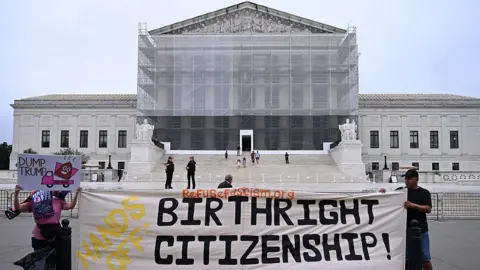
The US Supreme Court has will hear a pivotal case that puts to the test a longstanding principle: guaranteed citizenship for individuals born in the United States.
On the inaugural day in office this winter, President Donald Trump signed an order aiming to terminate this practice, but the move was halted by federal courts after legal challenges were filed.
The Supreme Court's final decision will either affirm citizenship rights for the infants of immigrants who are in the US illegally or on short-term permits, or it will overturn those rights entirely.
Next, the justices will schedule a date to hear the case between the federal government and claimants, which comprise foreign-born parents and their infants.
A Constitutional Cornerstone
For more than 150 years, the 14th Amendment has enshrined the principle that every person born in the country is a US citizen, with exceptions for children born to embassy personnel and personnel of invading forces.
"Anyone born or naturalized in the United States, and subject to the jurisdiction thereof, are citizens of the United States."
The contested executive order sought to refuse citizenship to the children of people who are either in the US in violation of immigration law or are in the country on temporary visas.
The United States is one of about 30 countries – mostly in the Western Hemisphere – that grant instant citizenship to any person born on their soil.


